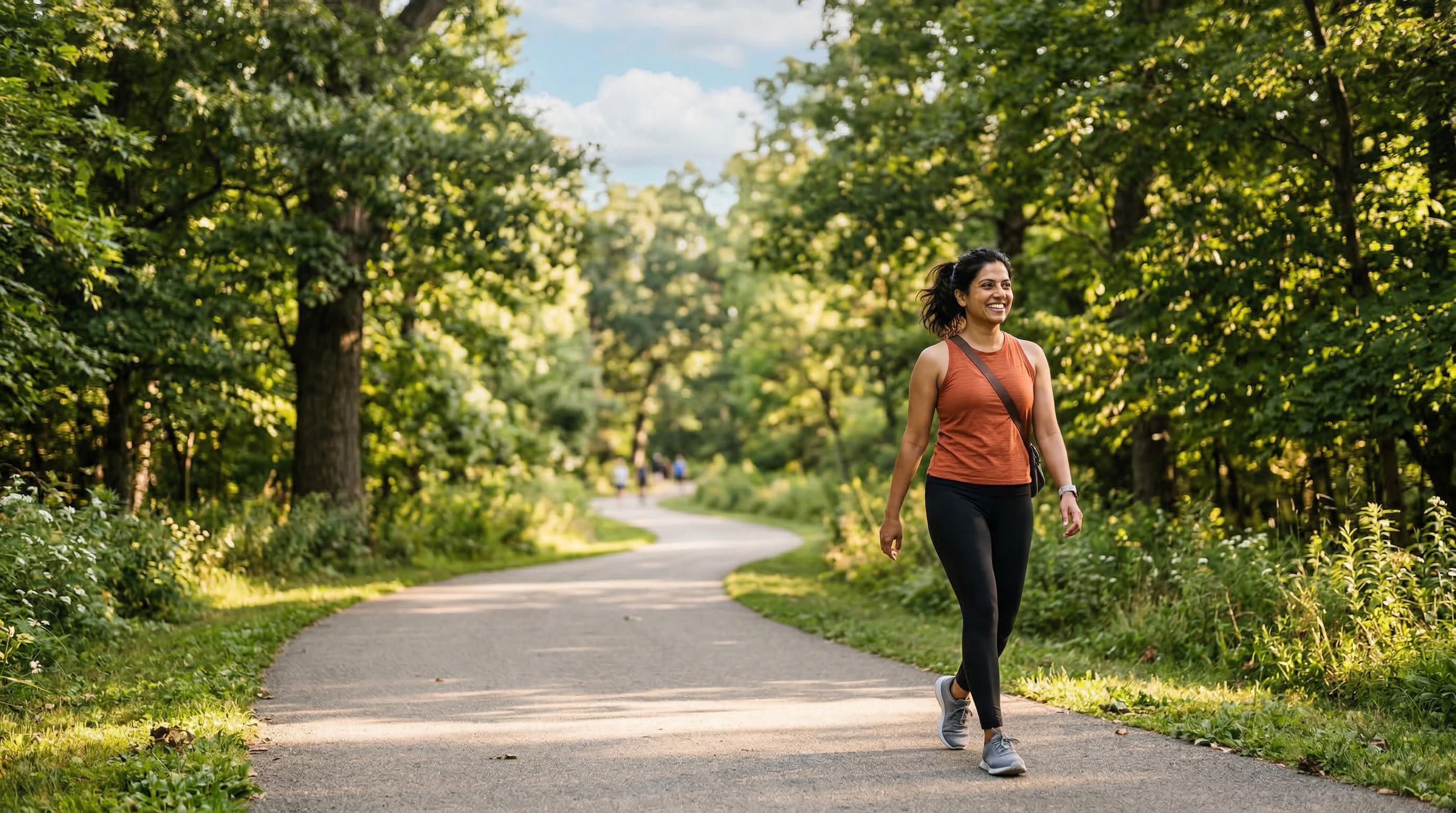
You've just finished a plate of rice and dal. Your blood sugar is about to surge — and there's one simple thing you can do in the next 15 minutes that can slash that spike by 30-50%. No medication. No special equipment. Just walk.
Post-meal walking is one of the most underrated, scientifically-proven strategies for managing Type 2 diabetes — and it's especially powerful for Indian diets, which are naturally high in carbohydrates. In this comprehensive guide, we'll break down exactly how walking after meals works, when to start, how long to walk, and what to do when Indian summers make outdoor walking impossible.
📋 Table of Contents
- The Science: Why Walking After Meals Lowers Blood Sugar
- CGM Data: Real Blood Sugar Numbers Before and After Walking
- Optimal Timing: When to Start Walking After Eating
- How Long Should You Walk? (5 vs 10 vs 15 vs 30 Minutes)
- Walking After Indian Meals: Rice, Roti, Dosa, and More
- 7-Day Post-Meal Walking Plan for Indian Diabetics
- Summer, Monsoon, and Winter: Walking Alternatives for Every Season
- 8 Common Mistakes That Reduce Walking Benefits
- Walking vs Medication: How They Compare
- Special Considerations for Seniors and Those with Complications
- How to Track Your Progress with CGM or Glucometer
- Frequently Asked Questions
1. The Science: Why Walking After Meals Lowers Blood Sugar
When you eat — especially carbohydrate-rich Indian foods like rice, roti, or dosa — your blood sugar begins rising within 15-30 minutes. This post-meal (postprandial) glucose spike is one of the biggest challenges for people with Type 2 diabetes. Here's where walking becomes your secret weapon.
How It Works — Three Mechanisms
Mechanism 1: Muscle Glucose Uptake
When you walk, your leg muscles contract and actively pull glucose from your bloodstream — without needing insulin. This is called non-insulin-mediated glucose uptake, and it's especially valuable for Type 2 diabetics whose insulin isn't working efficiently (insulin resistance). Your muscles essentially act as glucose sponges during movement.
Mechanism 2: GLUT4 Transporter Activation
Physical activity triggers special glucose transporters (GLUT4) to move to the surface of muscle cells. These transporters act like doors that let glucose flow in from the blood. Walking after eating means these doors open exactly when glucose levels are highest — perfect timing.
Mechanism 3: Reduced Hepatic Glucose Output
Light exercise signals your liver to slow down its own glucose production. During rest, your liver continuously releases stored glucose. Walking sends a signal: "We already have enough glucose available from the meal — no need to add more." This further prevents blood sugar from climbing too high.
Why This Matters for Indian Diabetics Specifically
Indian diets are among the most carbohydrate-heavy in the world. The average Indian meal contains 60-70% carbohydrates — compared to 45-50% in Western diets. This means:
- Higher post-meal spikes: A typical rice-dal-sabzi thali can raise blood sugar by 80-120 mg/dL
- More frequent spikes: Three main meals + chai with biscuits = 4-5 glucose peaks daily
- Greater benefit from walking: The higher the carb load, the more glucose is available for muscles to absorb during walking
This is why the "walk after meals" strategy may be even more effective for Indians than the Western populations studied in most clinical trials.
2. CGM Data: Real Blood Sugar Numbers Before and After Walking
Continuous Glucose Monitor (CGM) data provides the most compelling evidence for post-meal walking. Here's what typical CGM readings show for Indian Type 2 diabetics:
| Meal | Peak Without Walking | Peak With 10-Min Walk | Reduction |
|---|---|---|---|
| White rice + dal | 195 mg/dL | 152 mg/dL | -43 mg/dL (22%) |
| 2 Rotis + sabzi | 168 mg/dL | 138 mg/dL | -30 mg/dL (18%) |
| Masala dosa + chutney | 205 mg/dL | 160 mg/dL | -45 mg/dL (22%) |
| Poha + chai | 155 mg/dL | 128 mg/dL | -27 mg/dL (17%) |
| Idli-sambar (3 idlis) | 178 mg/dL | 140 mg/dL | -38 mg/dL (21%) |
| Biryani (1 cup) | 210 mg/dL | 168 mg/dL | -42 mg/dL (20%) |
Time-to-Peak Analysis
CGM data also reveals that walking shifts the glucose curve in two important ways:
- Lower peak: The maximum glucose reached is 17-22% lower
- Faster return to baseline: Blood sugar returns to pre-meal levels 25-40 minutes sooner
This means you spend less total time in the hyperglycemic zone (above 140 mg/dL) — which is what causes long-term complications like neuropathy, retinopathy, and kidney damage.
3. Optimal Timing: When to Start Walking After Eating
Timing is everything. Walk too early and you might get cramps. Walk too late and you miss the glucose peak. Here's what the research shows:
| Start Walking | Effectiveness | Practical Notes |
|---|---|---|
| Immediately (0 min) | ⭐⭐⭐ Good | May cause discomfort if meal was heavy |
| 15 minutes after | ⭐⭐⭐⭐⭐ Best | Optimal — catches the rising glucose wave |
| 30 minutes after | ⭐⭐⭐⭐ Very Good | Still effective, slightly past peak onset |
| 45 minutes after | ⭐⭐⭐ Good | Catches the peak but misses early rise |
| 60+ minutes after | ⭐⭐ Fair | Some benefit but glucose may have already peaked |
4. How Long Should You Walk? (5 vs 10 vs 15 vs 30 Minutes)
You don't need to walk for an hour. Even short walks make a measurable difference:
| Duration | Avg. Spike Reduction | Best For |
|---|---|---|
| 5 minutes | 12-15% | Busy professionals, starting out |
| 10 minutes | 22-28% | Optimal balance of time vs benefit |
| 15 minutes | 30-35% | Maximum practical benefit |
| 30 minutes | 35-40% | Diminishing returns beyond 15 min |
The research is clear: 10-15 minutes is the sweet spot. Beyond 15 minutes, the additional glucose-lowering benefit plateaus. This is great news because it means you don't need to carve out huge chunks of time — just 10 minutes, three times a day after meals.
What Pace Should You Walk?
You don't need to power-walk or jog. A moderate, comfortable pace (about 3-4 km/hr) is sufficient. The goal is light activity that keeps muscles gently contracting — not exercise that leaves you breathless. Think of it as a leisurely stroll, not a workout.
Signs you're walking at the right pace:
- You can hold a conversation easily
- You're not sweating heavily
- You feel slightly warm but not tired
- Your breathing is slightly elevated but comfortable
5. Walking After Indian Meals: Rice, Roti, Dosa, and More
Not all Indian meals affect blood sugar equally. Here's a meal-by-meal guide to prioritizing your walks:
🔴 High Priority — Always Walk After These
- White rice meals (lunch thali, curd rice, biryani) — Highest glycemic impact; walking reduces spike by 35-45 mg/dL
- Dosa/uttapam — Fermented rice batter has high GI; walk immediately benefits
- Festival foods (laddu, halwa, payasam) — Extremely high sugar + refined carbs; walking critical
- Bread-based meals (pav bhaji, sandwiches) — Refined wheat spikes glucose fast
🟡 Medium Priority — Walk When Possible
- Roti/chapati meals — Whole wheat has moderate GI; walking still reduces spike by 20-30 mg/dL
- Poha/upma — Flattened rice or semolina; moderate impact
- Idli-sambar — Steamed but still rice-based; walk helps
🟢 Lower Priority — Walk If Convenient
- Besan cheela/moong dal chilla — High protein, low GI; smaller spike
- Ragi dosa/roti — Finger millet has low GI; walking still helps but spike is naturally smaller
- Salad-heavy meals — Low carb = lower spike
6. 7-Day Post-Meal Walking Plan for Indian Diabetics
Here's a practical, progressive plan to build the post-meal walking habit:
| Day | After Breakfast | After Lunch | After Dinner |
|---|---|---|---|
| Day 1 (Mon) | — | 5 min walk | — |
| Day 2 (Tue) | — | 5 min walk | 5 min walk |
| Day 3 (Wed) | 5 min walk | 5 min walk | 5 min walk |
| Day 4 (Thu) | 5 min walk | 10 min walk | 5 min walk |
| Day 5 (Fri) | 5 min walk | 10 min walk | 10 min walk |
| Day 6 (Sat) | 10 min walk | 10 min walk | 10 min walk |
| Day 7 (Sun) | 10 min walk | 15 min walk | 10 min walk |
By Week 2: Aim for 10-15 minutes after every meal. That's just 30-45 minutes total daily — split into 3 easy chunks.
Tips to Make It Stick
- Set a phone alarm for 15 minutes after your usual meal times
- Walk with your spouse or family — makes it social and accountable
- Keep comfortable footwear near the dining area — removes friction
- Use it as phone time — catch up on calls or podcasts while walking
- Track your post-meal glucose — seeing results is the best motivator
7. Summer, Monsoon, and Winter: Walking Alternatives for Every Season
India's diverse climate means outdoor walking isn't always practical. Here are season-specific alternatives:
☀️ Summer (April-June) — When It's 35-45°C Outside
- Walk inside your home — Living room, balcony corridor, or terrace (if shaded)
- Shopping mall walks — Air-conditioned and flat surfaces; many Indian cities have malls nearby
- Office corridor walks — After lunch, walk the office hallway for 10 minutes
- Walking in place — Standing march while watching TV provides similar muscle activation
- Treadmill — If accessible at home or apartment gym
🌧️ Monsoon (July-September)
- Covered walkways — Many apartment complexes have covered parking areas
- Indoor walking — Same as summer alternatives
- Staircase walking — Climb 2-3 floors slowly after meals (avoid if you have knee issues)
- Standing exercises — Gentle calf raises, side steps, or marching in place
❄️ Winter (November-February)
This is actually the best season for walking in most Indian cities. Cool, pleasant weather makes post-meal walks enjoyable. Take advantage of this season to build strong habits that carry into summer.
8. 8 Common Mistakes That Reduce Walking Benefits
- Walking on an empty stomach instead of after meals — Fasting walks burn fat but don't reduce post-meal spikes. The timing after eating is what matters for glucose control.
- Walking too fast — Intense exercise can trigger stress hormones (cortisol, adrenaline) that temporarily raise blood sugar. Keep it gentle.
- Sitting down immediately after the walk — Try to stay lightly active (standing, doing dishes) for another 10-15 minutes after your walk.
- Skipping walks after the heaviest meal — If you can only walk once a day, choose after your highest-carb meal (usually lunch for rice-eaters, dinner for roti-eaters).
- Drinking sweet chai/juice during the walk — This defeats the purpose. Drink plain water instead.
- Walking only on some days — Consistency matters more than duration. A 5-minute daily walk beats a 30-minute walk twice a week.
- Not wearing proper footwear — Diabetics with neuropathy must wear proper shoes. Never walk barefoot outside — foot injuries can lead to serious complications.
- Ignoring hypoglycemia signs — If you're on insulin or sulfonylureas, walking can sometimes lower blood sugar too much. Carry glucose tablets or a small snack just in case. Symptoms: dizziness, sweating, shakiness, confusion.
9. Walking vs Medication: How Do They Compare?
Let's be clear: walking after meals does not replace medication. But the numbers are impressive when you compare:
| Intervention | HbA1c Reduction | Post-Meal Spike Reduction |
|---|---|---|
| Metformin 500mg | 0.5-1.0% | 20-30% |
| 10-min post-meal walk (3x/day) | 0.3-0.5% | 22-35% |
| Metformin + post-meal walking | 0.8-1.5% | 40-55% |
| Acarbose 50mg | 0.5-0.8% | 25-35% |
Unlike medication, walking also provides:
- Improved cardiovascular health
- Better sleep quality
- Reduced stress and anxiety
- Weight management
- Improved digestion
- Better mood and mental clarity
- Zero cost and zero side effects
10. Special Considerations for Seniors and Those with Complications
For Seniors (60+ years)
- Start with just 3-5 minutes and increase gradually
- Always wear sturdy, non-slip footwear
- Walk in well-lit, even-surface areas — avoid uneven roads or dimly lit streets
- Use a walking stick if balance is a concern
- Walk with a companion whenever possible
- If you feel dizzy or unwell, stop immediately and sit down
For Those with Diabetic Neuropathy
- Check feet daily for blisters, cuts, or redness
- Wear diabetic-specific footwear (MCR chappals or cushioned shoes)
- Walk on smooth surfaces only — avoid gravel, grass, or wet surfaces
- Consider seated exercises (chair marches, leg lifts) as alternatives
For Those with Heart Conditions
- Get clearance from your cardiologist before starting
- Walk at a very gentle pace — slower than normal conversation pace
- Stop if you feel chest pain, breathlessness, or palpitations
- Keep walks to 5-10 minutes initially
11. How to Track Your Progress with CGM or Glucometer
The best way to see walking's impact is to measure it yourself:
Method 1: Paired Glucometer Testing
- Day 1: Eat your normal lunch, sit for 2 hours, check blood sugar at 1 hour and 2 hours post-meal
- Day 2: Eat the same lunch, walk for 10 minutes starting at 15 min post-meal, check blood sugar at 1 hour and 2 hours
- Compare the two readings — you'll typically see a 25-40 mg/dL difference at the 1-hour mark
Method 2: CGM Monitoring
If you have a CGM (like Libre or Dexcom), simply compare your post-meal glucose curves on walking vs non-walking days. The visual difference in the graph is often dramatic and highly motivating.
What Success Looks Like
- Week 1: Post-meal readings drop by 15-25 mg/dL on walking days
- Month 1: Average fasting glucose may drop 5-10 mg/dL
- Month 3: HbA1c improvement of 0.3-0.5% (combined with diet management)
- Month 6: Some patients can reduce medication dosage (with doctor's approval)
❓ Frequently Asked Questions
How long should a diabetic walk after eating?
Research shows that a 10-15 minute walk starting within 15-30 minutes after eating is optimal for blood sugar control. CGM data indicates this can reduce post-meal glucose spikes by 30-50%. Even a 5-minute walk provides measurable benefits compared to sitting after meals.
Is walking after dinner better than walking after lunch for diabetes?
Walking after dinner is especially beneficial because evening insulin sensitivity is naturally lower, making dinner spikes harder to control. However, walking after every meal provides the best results. If you can only walk once, post-dinner walks typically show the greatest glucose reduction on CGM data.
Can walking after meals replace diabetes medication?
Walking after meals is a powerful complementary strategy but should NOT replace prescribed diabetes medication without your doctor's approval. Studies show post-meal walking can reduce HbA1c by 0.3-0.5%, which is significant but usually not enough alone. Always consult your diabetologist before changing medication.
What if it's too hot to walk after meals in Indian summer?
During Indian summers (April-June), walk indoors — in shopping malls, office corridors, or at home. Walking in place, using a treadmill, or doing gentle standing exercises after meals provides similar blood sugar benefits. Avoid outdoor walks when temperatures exceed 35°C as heat can affect blood sugar unpredictably.
Should I walk after eating rice or roti?
Yes — walking is especially important after high-carb Indian meals like rice or roti. White rice can spike blood sugar by 60-80 mg/dL, but a 10-minute walk after eating rice can reduce the spike by 30-40%. Pair walking with portion control and adding vegetables/dal for the best results.
🚶 Start Your Post-Meal Walking Journey Today
Download our free blood sugar journal to track your meals, walks, and glucose readings. See the impact for yourself!
Get Free Blood Sugar Journal →The Bottom Line
Walking after meals is the single most accessible, evidence-based lifestyle intervention for managing post-meal blood sugar spikes in Type 2 diabetes. For Indian diabetics dealing with carb-heavy diets, it's even more impactful.
The formula is simple:
- When: 15 minutes after finishing your meal
- How long: 10-15 minutes
- How fast: Comfortable, conversational pace
- How often: After every meal (prioritize your highest-carb meal if time is limited)
No gym membership. No special equipment. No side effects. Just your two feet and 10 minutes of your time. Your blood sugar — and your future self — will thank you.
Disclaimer: This article is for informational purposes only and does not constitute medical advice. Always consult your diabetologist or healthcare provider before making changes to your diabetes management routine.