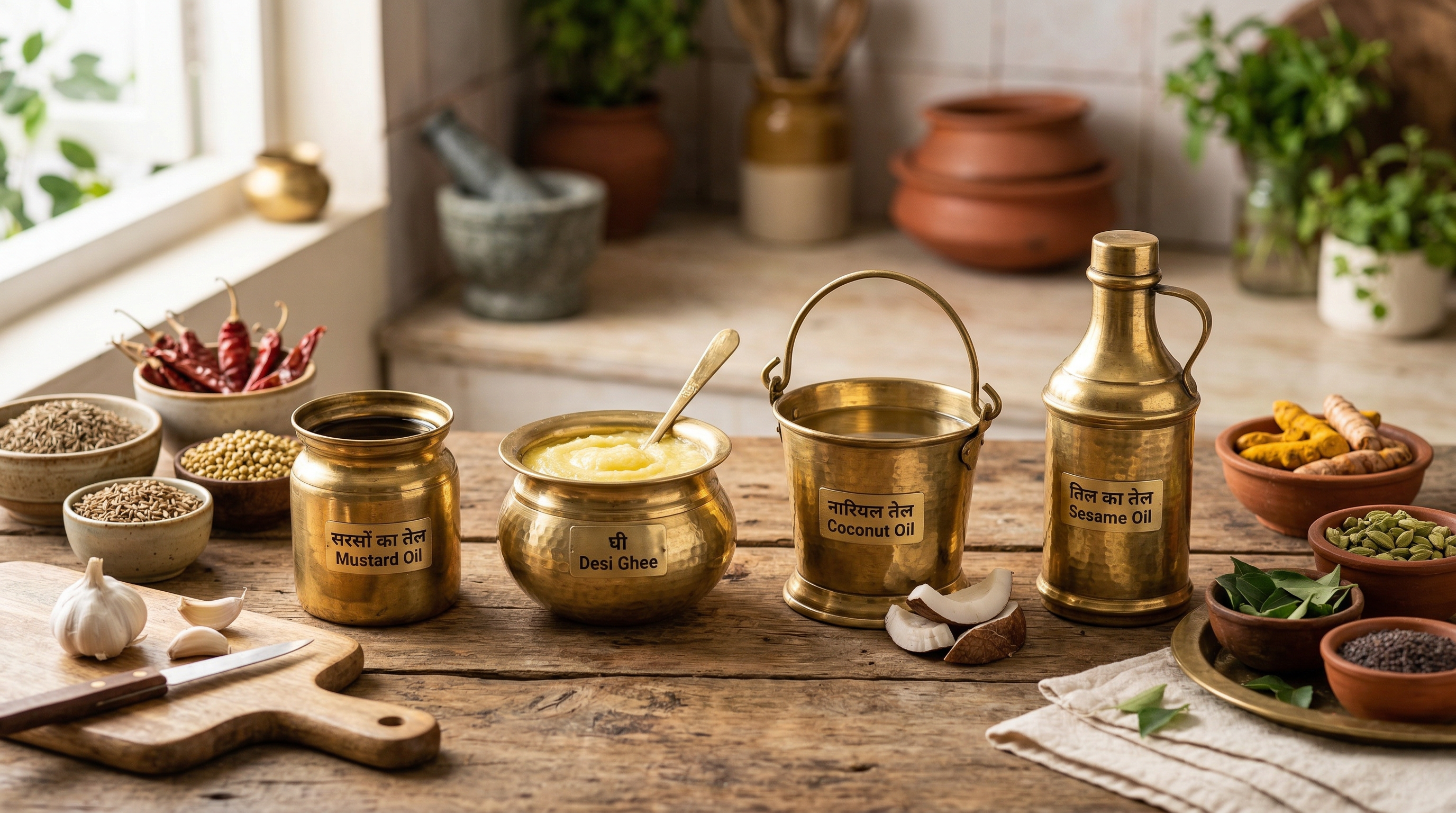
The cooking oil in your kitchen could be silently worsening your diabetes. India consumes over 25 million tonnes of edible oil annually, and most Indian households use refined sunflower or soybean oil — two of the worst choices for blood sugar control. Yet switching to the right oil can reduce inflammation, improve insulin sensitivity by 15-20%, and lower HbA1c over time.
With 101 million diabetics in India and cooking oil being the single most-used ingredient in every Indian kitchen, this choice matters more than most people realize. A typical Indian household uses 1-1.5 liters of oil per person per month — that's 12-18 liters of oil flowing through your body every year.
This guide ranks 10 common Indian cooking oils from best to worst for diabetics, with practical details on smoke points, omega fatty acid ratios, price comparisons, and region-specific recommendations. No vague "eat healthy fats" advice — just actionable data you can use today.
📋 Table of Contents
- Why Cooking Oil Matters for Diabetics
- How to Judge a Cooking Oil: 5 Key Factors
- Complete Ranking: 10 Cooking Oils for Diabetics
- Master Comparison Table
- Oils Diabetics Should Avoid
- Regional Oil Guide: North, South, East, West India
- Smart Cooking Tips to Reduce Oil Intake
- The Oil Rotation Strategy
- FAQs
Why Cooking Oil Matters for Diabetics
Cooking oil doesn't directly contain sugar, so many diabetics ignore it. That's a mistake. Here's how the wrong oil worsens diabetes:
1. Chronic Inflammation → Insulin Resistance
Oils high in omega-6 fatty acids (sunflower, soybean, corn oil) promote chronic low-grade inflammation. This inflammation directly causes insulin resistance — your cells stop responding to insulin properly, requiring the pancreas to produce more. Over years, this accelerates the progression from pre-diabetes to Type 2 diabetes and makes existing diabetes harder to control.
2. Trans Fats from Overheating
When oil is heated beyond its smoke point, it forms trans fats and toxic aldehydes. Indian cooking — with tadka, deep frying, and high-heat roasting — pushes oils to their limits. Using an oil with a low smoke point for Indian cooking creates trans fats every single meal. Trans fats increase insulin resistance by 30-40% and raise LDL ("bad") cholesterol.
3. Omega-3 to Omega-6 Ratio
The ideal ratio is 1:1 to 1:4. Most Indians consume a ratio of 1:20 to 1:50 — heavily skewed toward pro-inflammatory omega-6. This imbalance is a major driver of the diabetes epidemic in India. Choosing oils with better omega ratios can shift this balance significantly.
4. Weight Gain → Worse Blood Sugar Control
All oils are calorie-dense (about 120 kcal per tablespoon). But some oils — particularly those with medium-chain triglycerides (coconut oil) and those rich in MUFA (mustard, olive) — promote satiety and are less likely to be stored as belly fat compared to refined seed oils.
How to Judge a Cooking Oil: 5 Key Factors
Not all oils are equal. Here are the five factors that matter most for diabetics:
- Smoke Point: Must be high enough for Indian cooking (200°C+ for tadka/frying). Oil heated past its smoke point becomes toxic.
- MUFA Content: Monounsaturated fatty acids (oleic acid) improve insulin sensitivity. Higher is better.
- Omega-3 to Omega-6 Ratio: Closer to 1:1 is ideal. Above 1:10 is inflammatory.
- Processing Method: Cold-pressed/kachi ghani retains antioxidants and nutrients. Refined oils are stripped of benefits.
- Saturated Fat: Moderate saturated fat is fine (ghee, coconut), but excessive amounts raise LDL cholesterol — risky for diabetics who already face 2-4x higher heart disease risk.
Complete Ranking: 10 Cooking Oils for Diabetics in India
🥇 1. Cold-Pressed Mustard Oil (Kachi Ghani Sarson Ka Tel)
Best Overall Choice for Indian Diabetics
Smoke Point: 250°C (excellent for all Indian cooking)
MUFA: 60% (erucic + oleic acid)
Omega-3:6 Ratio: 1:2 (exceptional)
Price: ₹180-250/liter (cold-pressed)
Best For: Daily cooking, tadka, paratha, frying, pickling
Mustard oil is India's hidden superfood for diabetics. Its allyl isothiocyanate (the compound that gives it the pungent flavor) has been shown to improve insulin sensitivity by 15-20% in clinical studies. The omega-3 to omega-6 ratio of 1:2 is the best among all affordable Indian cooking oils.
Traditional uses: North and East India have used kachi ghani mustard oil for centuries — for sarson ka saag, fish curries, achaar, and paranthas. It has a strong, distinctive flavor that many South and West Indians find too intense.
Caution: Mustard oil contains erucic acid (40-50%), which was controversially linked to heart issues in animal studies (at very high doses). Human studies show no harm at normal cooking amounts. FSSAI allows mustard oil with up to 2% erucic acid for sale. Stick to cold-pressed varieties from reputed brands.
🥈 2. Extra Virgin Olive Oil (EVOO)
Best for Salads, Raita & Low-Heat Cooking
Smoke Point: 160-190°C (not suitable for deep frying)
MUFA: 73% (oleic acid)
Omega-3:6 Ratio: 1:10
Price: ₹600-1,200/liter
Best For: Salad dressings, raita drizzle, light sautéing, dips
The gold standard for diabetes management globally. EVOO is 73% oleic acid (MUFA), which directly improves insulin sensitivity. The PREDIMED study showed that a Mediterranean diet with EVOO reduced diabetes risk by 40%. It's also rich in polyphenols (oleuropein, hydroxytyrosol) — powerful antioxidants that reduce inflammation.
The India problem: EVOO is expensive, doesn't suit high-heat Indian cooking, and many Indians dislike its fruity flavor. Use it as a finishing oil — drizzle on salads, dal, raita, or soups after cooking. Don't waste it on tadka or deep frying — it'll burn and lose all benefits.
Buying tip: Look for dark glass bottles, "extra virgin" certification, and harvest dates. Avoid "olive oil" (without "extra virgin") or "pomace olive oil" — these are refined and have minimal health benefits.
🥉 3. Virgin Coconut Oil (Nariyal Tel)
Best for South Indian Cooking
Smoke Point: 175°C (virgin) / 230°C (refined)
MUFA: 6%
MCT Content: 62% (lauric + capric + caprylic acid)
Price: ₹200-350/liter (virgin cold-pressed)
Best For: Appam, stir-fries, chutneys, curries, coffee
Coconut oil's medium-chain triglycerides (MCTs) are metabolized differently — they bypass normal fat digestion, go straight to the liver, and are used for energy. This means they don't spike blood sugar and may improve insulin sensitivity by 15-17%.
The saturated fat concern: Coconut oil is 82% saturated fat, which worries many doctors. However, lauric acid (48% of coconut oil) raises HDL ("good") cholesterol more than LDL. Recent meta-analyses suggest coconut oil is neutral-to-positive for heart health when consumed in moderation (1-2 tbsp/day).
Traditional uses: Kerala, Tamil Nadu, Karnataka, and coastal India have used coconut oil for millennia. It gives a distinctive flavor to avial, thoran, appam, and fish curries that no other oil can replicate.
4. Cold-Pressed Sesame Oil (Til Ka Tel / Gingelly Oil)
Excellent for South Indian Diabetics
Smoke Point: 210°C
MUFA: 40%
Omega-3:6 Ratio: 1:45 (high omega-6, but compensated by unique antioxidants)
Price: ₹250-400/liter (cold-pressed)
Best For: Tamil/Andhra cooking, tempering, chutneys, pickles
Sesame oil contains two unique compounds — sesamin and sesamol — that have remarkable anti-diabetic properties. Studies show sesame oil can reduce fasting blood glucose by 20-25 mg/dL and HbA1c by 0.3-0.5% over 60 days. It also contains vitamin E and lignans that protect against oxidative stress.
Despite its high omega-6 content, sesame oil's powerful antioxidants (sesamol, sesaminol) counteract the inflammatory effects, making it a net positive for diabetics. The Ayurvedic tradition has long valued til tel for its medicinal properties.
5. Cold-Pressed Groundnut Oil (Mungfali Ka Tel)
Good All-Rounder for Western India
Smoke Point: 230°C (excellent for frying)
MUFA: 46%
Omega-3:6 Ratio: 1:32
Price: ₹200-300/liter (cold-pressed)
Best For: Gujarati/Maharashtrian cooking, frying, snacks
Groundnut oil is the workhorse of Western Indian kitchens. Its high smoke point makes it ideal for farsan, deep-fried snacks, and Gujarati-style cooking. It has a pleasant, mild nutty flavor that enhances food without overpowering it.
For diabetics, groundnut oil is moderately beneficial — decent MUFA content (46%), good smoke point, but the omega-6 content is high. It also contains resveratrol (the same antioxidant found in red wine) and phytosterols that help lower cholesterol. Use it as a primary oil if you're in Gujarat/Maharashtra and rotate with mustard or sesame oil.
6. Rice Bran Oil
Decent Neutral Option
Smoke Point: 232°C
MUFA: 37%
Omega-3:6 Ratio: 1:20
Price: ₹150-200/liter
Best For: All cuisines, mild-flavored cooking, baking
Rice bran oil's star component is gamma-oryzanol — found only in rice bran. Research shows it reduces total cholesterol by 10-15%, improves insulin sensitivity, and has anti-inflammatory properties. It has a neutral flavor that works with any cuisine, making it a versatile choice.
The catch: Most rice bran oil in India is refined, which destroys much of the gamma-oryzanol. Cold-pressed rice bran oil retains more nutrients but is hard to find. If you use rice bran oil, look for brands that mention "physical refining" or "oryzanol-rich" on the label.
7. Desi Ghee (Clarified Butter)
Traditional Superfood — in Small Amounts
Smoke Point: 250°C (one of the highest)
MUFA: 25%
Saturated Fat: 62%
Price: ₹500-700/liter (cow ghee), ₹400-500/liter (buffalo ghee)
Best For: Tadka, paratha, dal, rice, roti finishing
Ghee has been demonized for decades, but modern research vindicates what Ayurveda always knew. Pure desi ghee contains:
- Conjugated Linoleic Acid (CLA): Improves insulin sensitivity and helps reduce belly fat
- Butyric Acid: A short-chain fatty acid that feeds beneficial gut bacteria, reduces gut inflammation, and improves insulin signaling
- Fat-soluble vitamins: A, D, E, K — essential for immune function and calcium absorption
The golden rule: 1-2 tsp/day = beneficial >2 tsp/day = harmful. Ghee is 900 kcal per 100g — easily the most calorie-dense food in your kitchen. Diabetics with high cholesterol or existing heart disease should limit to 1 tsp or skip entirely.
8. Flaxseed Oil (Alsi Ka Tel)
Best Omega-3 Source — But Don't Cook With It
Smoke Point: 107°C (extremely low — NEVER heat)
Omega-3 Content: 53% (alpha-linolenic acid)
Price: ₹400-600/250ml
Best For: Salad dressings, smoothies, drizzling on cooked food
Flaxseed oil has the highest omega-3 content of any plant oil. It's a powerful anti-inflammatory supplement for diabetics — studies show it can reduce fasting glucose by 10-15 mg/dL and improve insulin sensitivity. However, it has an extremely low smoke point and turns toxic when heated. Use it only cold — 1 tablespoon drizzled on salad, dal, or mixed into curd.
9. Sunflower Oil (Surajmukhi Tel) — Refined
❌ One of the Worst Choices for Diabetics
Smoke Point: 227°C
MUFA: 20%
Omega-3:6 Ratio: 1:70 (extremely inflammatory)
Price: ₹120-160/liter
Used In: Most Indian restaurants, packaged snacks, street food
Refined sunflower oil is the most commonly used oil in Indian households today — and one of the worst for diabetics. Its omega-6 to omega-3 ratio of 70:1 is a recipe for chronic inflammation. The refining process strips away vitamin E and phytosterols, leaving empty calories that promote insulin resistance.
High-oleic sunflower oil (where available) is a better variant with 80% MUFA, but it's rare and expensive in India. If you currently use regular sunflower oil, switching to mustard or groundnut oil is one of the simplest, highest-impact changes you can make for your diabetes.
10. Soybean Oil / Refined Vegetable Oil
❌ Avoid Completely
Smoke Point: 230°C
Omega-3:6 Ratio: 1:7 (looks okay, but it's misleading)
Price: ₹100-140/liter
Used In: Restaurant cooking, packaged food, "vegetable oil" blends
Soybean oil dominates India's "vegetable oil" and "refined oil" market. Despite a seemingly decent omega ratio, the refining process creates 0.5-2% trans fats and destroys beneficial compounds. Studies link high soybean oil consumption to increased obesity, insulin resistance, and fatty liver disease. The hexane solvent residues from extraction add another layer of concern.
When a product label says "refined vegetable oil" or "edible vegetable oil" without specifying the type, it's almost always soybean oil. Check ingredient lists on every packaged food you buy.
Master Comparison Table
| Oil | Smoke Point | MUFA% | Ω3:Ω6 | Price (₹/L) | Diabetes Rating |
|---|---|---|---|---|---|
| Mustard (cold-pressed) | 250°C | 60% | 1:2 | 180-250 | ★★★★★ |
| EVOO | 160-190°C | 73% | 1:10 | 600-1200 | ★★★★★ |
| Coconut (virgin) | 175°C | 6% | N/A | 200-350 | ★★★★ |
| Sesame (cold-pressed) | 210°C | 40% | 1:45 | 250-400 | ★★★★ |
| Groundnut (cold-pressed) | 230°C | 46% | 1:32 | 200-300 | ★★★½ |
| Rice Bran | 232°C | 37% | 1:20 | 150-200 | ★★★ |
| Ghee (desi) | 250°C | 25% | N/A | 500-700 | ★★★ (max 2 tsp) |
| Flaxseed | 107°C | 18% | 4:1 (Ω3>Ω6) | 400-600/250ml | ★★★ (cold only) |
| Sunflower (refined) | 227°C | 20% | 1:70 | 120-160 | ★½ |
| Soybean / Vegetable Oil | 230°C | 23% | 1:7* | 100-140 | ★ |
*Soybean's omega ratio looks acceptable on paper but the refined form contains trans fats and inflammatory compounds that negate any benefit.
Oils Diabetics Should Strictly Avoid
🚫 The "Never Use" List
- Refined Sunflower Oil: Omega-6 overload (1:70 ratio). The #1 oil driving inflammation in Indian diabetics.
- Refined Soybean Oil / "Vegetable Oil": Trans fats, hexane residues, promotes insulin resistance and fatty liver.
- Palm Oil (Vanaspati): 50% saturated fat, heavily refined, used in commercial snacks and bakery products. Check labels on biscuits, namkeen, and ready-to-eat foods.
- Margarine / Dalda: Hydrogenated fat = trans fat. Increases insulin resistance by 30-40%. Still used in many restaurants and bakeries.
- Reused / Repeatedly Heated Oil: Restaurants reuse frying oil 5-10 times, creating massive amounts of toxic aldehydes and trans fats. This is why frequent restaurant/street food eating is devastating for diabetics.
Regional Oil Guide: Which Oil for Your Kitchen?
India's cooking oil traditions are deeply regional. Here's the best diabetes-friendly oil strategy for each region:
🏔️ North India (Delhi, Punjab, UP, Rajasthan, MP)
Traditional Oil: Mustard oil, ghee
Diabetes-Friendly Strategy:
- Primary: Cold-pressed mustard oil for daily cooking (paratha, sabzi, dal tadka)
- Secondary: Desi ghee — 1 tsp on roti/rice for flavor and glycemic control
- Finishing: EVOO for salads, raita, chaat dressings
- Avoid: Refined oil for poori/pakora — use mustard oil instead (higher smoke point, better nutrition)
North Indians are lucky — the traditional mustard oil + ghee combination is actually one of the best for diabetes. The shift to refined sunflower oil in the last 20 years has coincided with the diabetes explosion. Going back to your grandparents' oil is the healthiest choice.
🌴 South India (Kerala, Tamil Nadu, Karnataka, AP, Telangana)
Traditional Oil: Coconut oil, sesame oil (gingelly)
Diabetes-Friendly Strategy:
- Primary: Virgin coconut oil for appam, curries, stir-fries, thoran
- Secondary: Cold-pressed sesame/gingelly oil for Tamil and Andhra cooking
- Tadka/Tempering: Coconut oil or sesame oil (both have adequate smoke points for tempering)
- Finishing: EVOO for mixed rice, salads
- Avoid: Refined sunflower oil — it has replaced coconut oil in many South Indian kitchens in the last decade. Switch back.
South India's traditional oils (coconut + sesame) are both excellent for diabetics. The MCTs in coconut oil and the sesamol in sesame oil work through completely different mechanisms, making rotation between them ideal.
🐟 East India (Bengal, Odisha, Assam, Bihar, Jharkhand)
Traditional Oil: Mustard oil
Diabetes-Friendly Strategy:
- Primary: Kachi ghani mustard oil for everything — fish curry, shorshe ilish, aloo posto, begun bhaja
- Secondary: Rice bran oil for light dishes where mustard's strong flavor isn't desired
- Special: 1 tbsp flaxseed oil daily (drizzle on curd rice or salad)
- Avoid: Refined oil for deep-frying — mustard oil handles high heat better
Bengali and Eastern Indian cuisine is traditionally mustard-oil-based, which is excellent. Bihar's sattu culture and Bengal's fish-with-mustard tradition are inherently diabetes-friendly when oils aren't swapped for refined versions.
🌊 West India (Gujarat, Maharashtra, Goa)
Traditional Oil: Groundnut oil, coconut oil (Goa)
Diabetes-Friendly Strategy:
- Primary: Cold-pressed groundnut oil for daily Gujarati/Maharashtrian cooking
- Secondary: Coconut oil for Konkani/Goan dishes
- Tadka: Ghee (1 tsp) for dal, kadhi, and khichdi
- Finishing: EVOO for salads, koshimbir
- Avoid: Refined groundnut oil — always choose cold-pressed (kachi ghani)
Gujarat and Maharashtra's groundnut oil tradition is good but not the best for diabetes. Supplement with weekly mustard oil dishes and regular EVOO use to improve the omega balance.
Smart Cooking Tips to Reduce Oil Intake
Choosing the right oil is half the battle. Reducing the quantity is equally important. ICMR recommends 20-25g (4-5 teaspoons) of visible fat per day — most Indians consume 3-5x that amount.
✅ 10 Oil-Reduction Hacks for Indian Cooking
- Measure with a teaspoon instead of pouring directly from the bottle. This single change reduces oil use by 30-40%.
- Use non-stick or cast-iron cookware — well-seasoned cast iron needs 50% less oil than stainless steel.
- Steam + tadka method: Steam vegetables first, then add a small tadka (1 tsp oil + spices) on top. Full flavor, 70% less oil.
- Air fryer for snacks: Pakoras, cutlets, tikki — all can be made with 1 tsp oil in an air fryer instead of 1 cup oil for deep frying.
- Spray bottle: Fill a spray bottle with your cooking oil. One spray = 0.5 tsp. Perfect for tawa cooking.
- Grill and roast more: Tandoori roti, grilled paneer, roasted vegetables — all need minimal oil.
- Pressure cooker curries: Dals and curries cooked in a pressure cooker need less oil than open-pan cooking.
- Don't add oil to boiling water for rice or pasta — it adds unnecessary calories with zero benefit.
- Drain fried foods properly on paper towels — removes 15-20% of absorbed oil.
- Read our breakfast guide for low-oil Indian breakfast ideas that don't spike blood sugar.
The Oil Rotation Strategy
No single oil provides the perfect fatty acid profile. The smartest approach is rotating 2-3 oils to get diverse nutrients:
| Rotation | Primary Oil (Daily) | Secondary Oil (Alternate) | Finishing Oil (Cold) |
|---|---|---|---|
| North India Plan | Mustard oil | Ghee (1-2 tsp) | EVOO / Flaxseed |
| South India Plan | Coconut oil | Sesame oil | EVOO / Flaxseed |
| East India Plan | Mustard oil | Rice bran oil | Flaxseed oil |
| West India Plan | Groundnut oil | Coconut oil / Mustard oil | EVOO |
| Budget Plan | Mustard oil | Rice bran oil | — |
Related Guides for Indian Diabetics
- 🍎 Best Fruits for Diabetics in India — Complete Guide
- 🍚 Is Rice Bad for Diabetics? White Rice vs Brown Rice Guide
- 🌾 Best Millets for Diabetics in India
- 🍳 Best Indian Breakfast for Diabetics
- 🧘 Yoga for Diabetes: Best Asanas to Lower Blood Sugar
- 🚶 Walking After Meals: The Best Blood Sugar Hack
- 🌡️ Diabetes and Summer Heat: Blood Sugar & Hydration Guide
Frequently Asked Questions
Which is the best cooking oil for diabetics in India?
Cold-pressed mustard oil is the best overall cooking oil for Indian diabetics. It has an excellent omega-3 to omega-6 ratio (1:2), a high smoke point (250°C) that handles all Indian cooking methods, allyl isothiocyanate that improves insulin sensitivity, and is affordable at ₹180-250 per liter. For cold use, extra virgin olive oil is the gold standard.
Is ghee good or bad for diabetics?
Pure desi ghee in moderation (1-2 teaspoons per day) is beneficial. It contains CLA (improves insulin sensitivity), butyric acid (gut health), and fat-soluble vitamins. A teaspoon of ghee on rice or roti actually lowers the glycemic response by 20-30%. However, exceeding 2 tsp/day adds significant calories and saturated fat. Diabetics with high cholesterol should limit to 1 tsp or consult their doctor.
Can diabetics use coconut oil for cooking?
Yes, virgin coconut oil is safe and beneficial in moderate amounts (1-2 tablespoons per day). Its MCTs are metabolized differently from other fats, don't spike blood sugar, and may improve insulin sensitivity by 15-17%. Best for South Indian cooking. People with high LDL cholesterol should limit intake due to the 82% saturated fat content.
Is refined oil bad for diabetics?
Yes. Refined oils (sunflower, soybean, canola) undergo hexane extraction and high-heat processing that creates trans fats (0.5-2%), destroys antioxidants, and produces inflammatory compounds. Refined sunflower oil's omega-6 to omega-3 ratio of 70:1 promotes chronic inflammation that worsens insulin resistance. Always choose cold-pressed or kachi ghani oils.
How much cooking oil should a diabetic use per day?
ICMR recommends 20-25g (4-5 teaspoons) of total visible fat per day for diabetics. This includes all cooking oil, ghee, and butter. Use measuring spoons, non-stick cookware, and cooking methods like steaming, grilling, and air-frying to stay within this limit.
Should I use one oil or rotate between multiple oils?
Rotating 2-3 oils is better than using a single oil. Each oil has a unique fatty acid profile — no single oil provides the ideal balance. A good rotation: mustard oil for daily cooking, sesame or coconut oil for regional dishes, and EVOO or flaxseed oil as a cold finishing oil. Avoid commercial "blended oils" — they're typically refined oils mixed together.
What is the smoke point and why does it matter?
The smoke point is the temperature at which oil starts burning, releasing toxic aldehydes and free radicals that increase inflammation and insulin resistance. Indian cooking involves high-heat tadka, deep frying, and roasting — so high smoke points are essential. Mustard oil (250°C), ghee (250°C), and groundnut oil (230°C) are ideal. EVOO (160-190°C) should only be used cold or for light sautéing.
Is rice bran oil good for diabetics?
Rice bran oil is a decent option. Its gamma-oryzanol reduces cholesterol by 10-15% and improves insulin sensitivity. High smoke point (232°C) and neutral flavor make it versatile. The downside: most Indian rice bran oil is refined. Look for cold-pressed or "oryzanol-rich" variants for maximum benefit. Price: ₹150-200 per liter.
Track How Cooking Oil Changes Affect Your Blood Sugar
Switch your cooking oil and track the difference in your daily glucose readings. Our free blood sugar journal helps you identify which foods and oils work best for YOUR body.
📊 Download Free Blood Sugar Journal
Founder, Health Gheware. Building AI-powered diabetes management tools for Indians. Data-driven approach to blood sugar control using CGM technology and evidence-based nutrition.
Read more →
Disclaimer: This article is for informational purposes only and is not a substitute for professional medical advice. Cooking oil choices should be made in consultation with your doctor or dietitian, especially if you have heart disease, high cholesterol, or other conditions alongside diabetes. Individual responses vary — monitor your blood sugar and lipid profile when making dietary changes.